
How Does Parking Work When You Buy an Arlington Condo?
In Arlington, a condo parking space is either part of your unit’s ownership, assigned to your unit as a limited common element, or simply rented or licensed from the association or a third party. Which one you have decides whether it stays with the unit when you sell, who can change it, and what your lender and title company will see. The listing sheet saying “1 space” doesn’t tell you any of that.
Most buyers ask one parking question: how many spaces come with it? After 325+ condo transactions in Arlington, I’d ask a different one first: how is that space actually held? The answer changes what you’re buying.
Walk through Rosslyn, Clarendon, Ballston, or Crystal City and you’ll find buildings that handle parking three different ways, sometimes inside the same building. Here’s how to tell them apart before you write an offer.
The Three Ways a Parking Space Can Come With a Condo
- Part of the unit. In some buildings the space is its own piece of the condominium, conveyed in your deed along with the unit. It’s owned property, and it can be a separate line item in the legal description.
- Assigned as a limited common element. Virginia’s Condominium Act defines a limited common element as a portion of the common elements reserved for the exclusive use of one or more, but less than all, of the units. Many garage spaces work this way. You don’t own the concrete, but the space is tied to your unit by the condo documents.
- Rented or licensed. Some buildings treat parking as a month-to-month or annual arrangement through the association, a management company, or an outside garage operator. This kind of space does not automatically convey with the unit, and the fee can change.
The first two are tied to the property. The third is a service. Buyers lump them together because all three put a car in the same garage, but at resale they behave very differently.
Why It Matters at Closing and at Resale
Under Virginia law, assignments and reassignments of limited common elements are supposed to be reflected in the condominium instruments, and changing an owner’s rights usually takes the affected owner’s consent. That’s the paper trail you want to see. If a seller tells you “the space is yours,” ask which document says so.
Here’s what I check with clients on every purchase where parking is part of the decision:
- The space number and where it appears in the documents. Match the number in the contract to the declaration, plats, or recorded assignment. A mismatch is a problem to solve before closing, not after.
- Whether it’s conveyed in the deed. Your title company will see how the space is described. If it isn’t there and the seller says it is, stop and sort it out.
- Whether it can be sold or transferred separately. Some buildings let owners trade or sell spaces between units. Others prohibit it. The rules are in the condo documents, and this is the question that decides your flexibility later.
- Fees and rules. Is there a separate parking fee on top of your condo fee? Are there size limits, guest rules, or restrictions on electric vehicle charging? Look at these in the rules and the resale package.
- What the building’s parking looks like. Count spaces against units. A building with fewer spaces than units has a waitlist, a lottery, or a rental system, and that shapes your resale pool.
The resale certificate, also called the condo docs, is ordered by the seller and the listing agent, not by you. Read it for parking language, then compare it to the contract. The review period is a negotiable contract term, and in the standard contract it defaults to 3 days if left blank. Even at 0 days, you technically have until 9:00 PM the day the documents are delivered, but I’d never count on that window. If the docs arrive at 8:59 PM, you’re out of luck.
Go See the Space Before You Offer
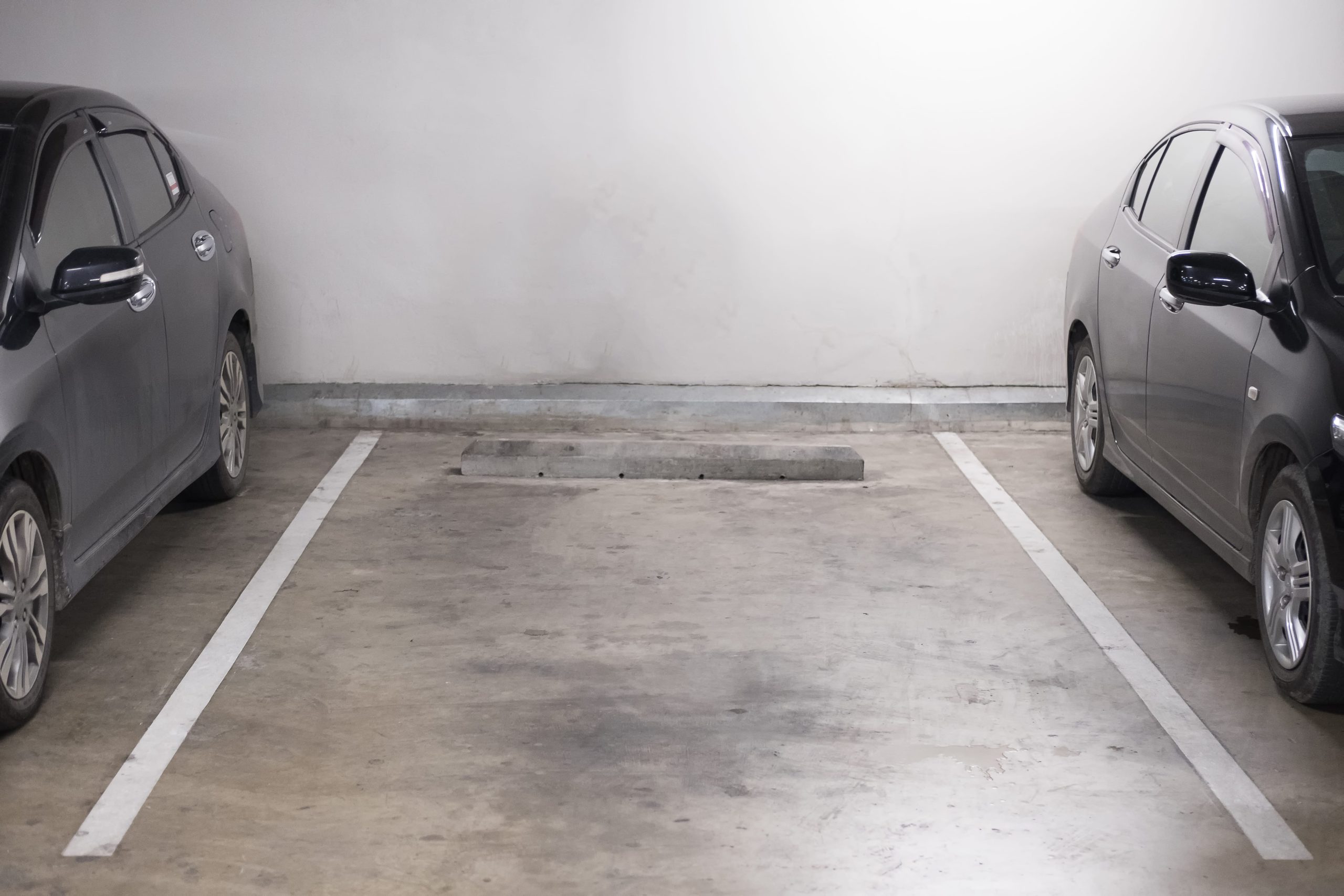
Don’t overlook the parking space itself. Always view it, and make sure your car will actually fit. In some newer buildings, the garage is packed tight. I’ve seen three spaces squeezed between two columns, leaving only inches for the middle space.
A listing that says “1 space” can’t tell you that. Here’s what I do with clients when we’re at the building:
- Stand in the exact space. Not a similar one on another level. Confirm the number matches your contract and the condo documents.
- Check the columns and walls. Look at what sits on each side of the space, and whether a column cuts into it.
- Test the doors. Can you open both front doors wide enough to get in and out, and can a passenger or child seat get in the back?
- Drive the approach. Ramps, tight turns, and narrow lanes matter as much as the space. Try it in the car you actually own, or at least bring a tape measure and your vehicle’s dimensions.
- Think about your next car. A larger SUV or truck can turn a workable space into a daily struggle.
If the space doesn’t work, that’s something to know before you offer, not after you close. It also affects resale, because the next buyer will make the same walk-through.
How Parking Affects Price and Financing
A deeded or permanently assigned space tends to hold value better than a rented one, because the next buyer can count on it. In walkable, Metro-adjacent buildings, a condo with a secure, convenient space can be a different product than the same floor plan without one. I won’t hand you a dollar figure here, because the gap swings by building and by garage. It’s something I price from recent sales in your specific building.
Parking can touch your financing too. If a space is separately owned or has its own tax or legal treatment, your lender and appraiser need accurate information about it. Tell your lender early, and make sure the contract describes the space the same way the documents do. Lenders also review the building itself, so the same project review that looks at reserves and litigation applies. Our guides on reading a condo reserve study and buying in a building with a lawsuit cover that side.
Parking also interacts with your monthly budget. If the space carries its own fee, add it to the condo fee before you decide what you can afford. We walk through that math in how condo fees cut your buying power.
Walk-to-Metro Buyers: Do You Even Need a Space?
If you’re choosing a building because you can walk to the train, you may be paying for a space you’ll rarely use. Some buyers are better off with a building that lets them rent a space only if needed. Others plan to keep a car and would rather pay for a deeded space than gamble on a waitlist. Our look at the walk-to-Metro premium helps you decide how much car-free living is worth to you.
If you plan to rent the unit out later, ask whether the space can go with the tenant, and read our guide on renting out your Arlington condo for the rules that matter there.
Every building handles this a little differently, and the only way to know for sure is to read that building’s documents. This is exactly the kind of question I walk my clients through before we ever write an offer.
Frequently Asked Questions
Does a parking space come with every Arlington condo?
No. Some buildings include a space with each unit, some sell spaces separately, and some offer none or only rental spaces. Check the contract, the listing, and the condo documents for the exact arrangement.
What is a limited common element parking space in Virginia?
It’s a part of the common elements reserved for the exclusive use of one or more, but fewer than all, of the units. Many garage spaces are assigned this way, with the assignment reflected in the condominium instruments.
Can I sell or rent my parking space separately?
It depends on the building’s condo documents. Some buildings allow owners to transfer or rent spaces to other owners, and some prohibit it. Read the declaration and rules before you count on that flexibility.
Who orders the resale package that describes parking?
The seller and the listing agent order it, not the buyer. Once you receive it, your review period under the contract starts, so read the parking language right away.
Should I pay more for a condo with a deeded space?
Often it makes the unit easier to resell, but the premium varies widely by building. A recent-sales comparison within the same building is the only reliable way to price it.
You now know the question that matters most: how is the space held, and where is that written down? If you’re ready to buy smart, with building-level insight most buyers never get, let’s build your plan. Start your buying plan at ArlingtonCondo.com/buy.
About Rick Bosl
Rick Bosl is Arlington’s condo specialist, with 23+ years of experience, 325+ transactions closed, and $165M+ in sales volume focused almost exclusively on Arlington’s condo market. As the founder of ArlingtonCondo.com and Managing Broker at KW Metro Center, Rick knows every building, every floor plan, and what buyers in each neighborhood are willing to pay. He holds the CRS and GRI designations and brings an electrical engineering degree and MBA to every transaction, because condo decisions should be driven by data, not guesswork. Licensed in Virginia, Maryland, and DC.